
How to write a tech pack for a bag
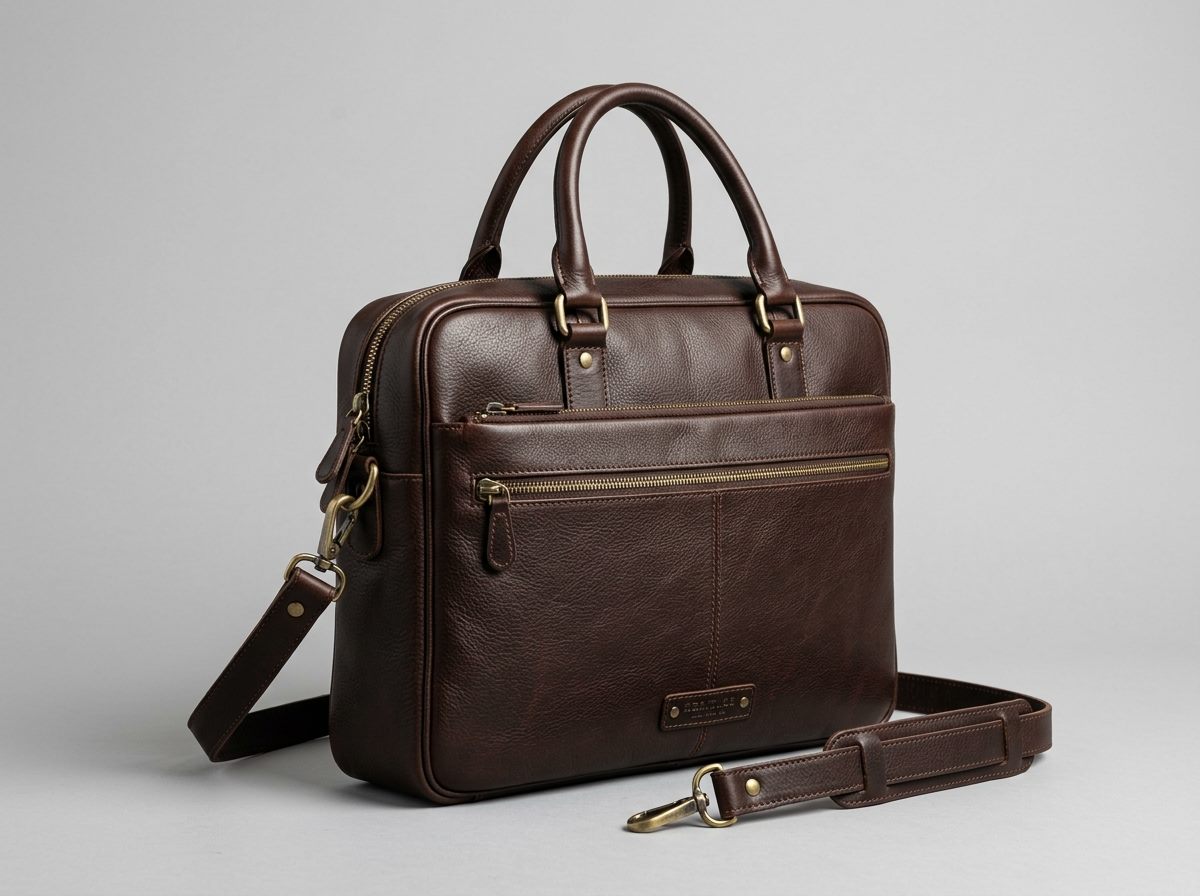
A technical pack (tech pack) is the definitive blueprint for manufacturing a custom bag. In the OEM export industry, the clarity and completeness of your tech pack directly determines the speed of sampling, the precision of your unit FOB price quote, and the consistency of bulk mass production.
Vague drawings or generic descriptions result in multiple costly sample iterations, miscommunicated tolerances, and production delays. This guide provides a step-by-step masterclass on building a factory-ready bag tech pack for [backpacks](/products/backpacks), [laptop bags](/products/laptop-bags), and [leather accessories](/materials/leather).
## 1. The 6 Mandatory Components of a Bag Tech Pack
A professional OEM tech pack must contain six dedicated specification sheets:
1. Cover & Style Overview Sheet: High-level style number, collection name, product category, target FOB price point, and target seasonal delivery date.
2. Dimensioned Orthographic CAD Drawings: Technical line drawings (front, back, sides, top, bottom, and interior cross-section) with callout measurement arrows in millimeters.
3. Bill of Materials (BOM): Comprehensive list of every raw material, fabric weight, gauge, colorway code, and hardware element.
4. Stitching & Seam Construction Callouts: Stitch density per inch (SPI), thread type, reinforcement bar-tacks, edge-painting, and piping details.
5. Branding & Graphic Placement Guide: Exact coordinate placements for logos, hot-stamp debossing, silicone patches, woven labels, and care tags.
6. Packaging & Labeling Specifications: Hangtag placement, barcode UPC/EAN stickers, silica gel inclusion, polybag warning text, and master carton markings.
## 2. Structuring an Accurate Bill of Materials (BOM)
The Bill of Materials is the core financial and engineering foundation of your product. Missing even minor trims causes quoting discrepancies:
- Shell Fabric: 900D Oxford Polyester with PU coating (0.15mm) for main exterior panels and gussets.
- Contrast Trim: Full-grain cowhide leather (1.2–1.4 mm thickness, semi-aniline) for handle wraps and zipper pull tabs.
- Lining Fabric: 210D high-density nylon with water-repellent treatment for interior linings and divider pockets.
- Internal Padding: 8mm high-density EVA foam (45 kg/m³ density) for laptop compartment and back panel.
- Primary Zipper: YKK #8 waterproof reverse coil matte PU coated tape with zinc alloy slider.
- Secondary Zipper: YKK #5 nylon coil standard woven polyester tape for internal security pocket.
- Hardware: Custom zinc alloy D-rings & hooks (38mm inner diameter, gunmetal finish) for shoulder strap anchor points.
- Sewing Thread: #40 / T-70 heavy duty bonded nylon thread for structural load seams and top-stitching.
## 3. Defining Critical Tolerances and Seam Construction
Soft goods naturally stretch and flex during automated cutting and sewing. To ensure repeatable quality control, define acceptable tolerance limits:
- Exterior Dimensions: +/- 5mm for soft backpacks and totes; +/- 2mm for structured briefcases and [wallets](/products/wallets).
- Stitch Density (SPI): Specify 6 to 8 stitches per inch (SPI) for heavy leather goods, and 8 to 10 SPI for high-tensile technical polyester.
- Seam Allowances: Standard 10mm (3/8”) for enclosed seams; 5mm for turned-edge leather construction.
- Load Point Reinforcement: Mandatory box-x stitching on all handle anchor roots and bar-tack stitching on shoulder strap connections capable of withstanding 20 kg pull loads.
## 4. Logo Artwork and Placement Callouts
When supplying brand artwork:
- Provide 1:1 scale vector files (.AI, .EPS, or vector .PDF) with all typography converted to outlines.
- Specify the exact branding method: Blind deboss, gold foil stamp, laser engraving, high-frequency TPU weld, or 3D embroidered patch.
- Detail distance benchmarks from top seams or corner edges (e.g. Centered horizontally, 45mm below the upper front zipper seam).
## 5. From Tech Pack to Production: The Sample Review Cycle
Once your tech pack is submitted, our sample room follows a rigorous validation cycle:
1. Proto-Sample Review: Testing structural balance, internal capacity, and foam firmness.
2. Material Optimization: Identifying yield efficiencies in leather hide utilization and fabric roll cutting.
3. Pre-Production Approval: Final golden sample sealing before factory line tooling.
Submit your tech pack for a fast review and [request a quote](/quote) from Vralet today.